By Omar
February 16, 2017

Drones or unmanned aerial vehicles have literally exploded onto the market. Ok, well not like the Ford Kuga or the Galaxy 7, but you know what I mean, in a good way. They are affordable, fairly easy to get the hang of and loads of fun.
Many people are quite content to use their drone for a bit of fun, flying them around and doing the odd trick or two. Most people, however, want to take aerial photographs or video using their drones. This takes a bit of skill and a fair amount of practice. It’s not the same a snapping a quick selfie with your smartphone.
The first step is to master your drone flying skills. It is no good trying to take quality photographs if you are still worried about controlling the drone.
If you want to improve the quality of the photographs or video taken from your drone, read on. If you have some basic photography skills, great. The same ideas apply, they just have to be adapted for aerial photography. If you are an absolute beginner, that is also ok, the following tips will help you to take impressive drone photographs.
Practice
If you are just starting out, the urge to start taking photographs can be overwhelming. Try and fight this urge and ensure you can fly the drone perfectly before you add more challenges to the task.
Once you 100% confident and competent in operating your drone, you can start experimenting with photographs and video.
Also, keep an eye on the weather. This applies to beginners as well as experienced flyers. The more wind you have to contend with, the harder the task is going to be and the less likely you will be to get good results.
Camera quality
Much of this will depend on your budget and how seriously you want to take the photography aspect. Many drones come with a built-in camera, starting from rather basic and inexpensive to some pretty good quality cameras.
If you are still learning or taking the odd photographs as a hobby, the built-in cameras are fine. If you want to take it more seriously and produce high quality or commercial quality photographs, then it would be wise to go for a drone that you can attach the camera of your choice to. You might choose to start with a fairly basic camera and upgrade as your skills and needs develop.
A few things to look for in a camera:
Go for the highest megapixel count your budget will allow
The better the resolution, the clearer your photographs will be
Take a look at the view modes that are available to see what works best for you
Low-light capabilities are a great advantage
If you intend to shoot video as well as still images, the higher the frames per second the better quality your video will be
Invest in a Gimbal
A gimbal is a joint that mounts the camera onto the drone and assists in stabilizing the camera, compensating for the movement and keeping it steady as you shoot. Some drones with a built-in camera already have a gimbal. If you are adding your own camera, it is worth investing in a gimbal, especially if you want to shoot video.
They can be rather costly but if you have invested in a decent drone and a quality camera, it is worth spending the extra on a gimbal for better quality and clarity.
Most gimbals also allow you to move, tilt or angle the camera as well, allowing for a greater range of angles and options when shooting.
Go higher for more perspective
Many people try and fly close to the object they wish to photograph. While this might seem logical, it misses the main advantage of having a drone that can hover high above the subject, giving a great perspective and more into the picture.

Practice and experiment with different heights and angles to get an idea of what I am talking about.
Use GPS Mode
GPS mode can come in really handy, especially for less experienced flyers and photographers. The main advantage is that it improves stabilizations but it also allows you to focus on the photography without having to think much about controlling the UAV.
You can survey the area, pre-plan the flight path and then let the drone do its thing while you concentrate on taking the best shots.
Having a Drone with GPS mode is a most for Drone Photography. Unlike most RC craft, price is not a good measure of ease of use. If you take an RC car, for example, the more expensive models have more features and higher speeds and are more difficult to control. With drones or UAVs the slightly more expensive models are generally easier to control.
Use FPV
Some drones offer first person view or FPV as a standard feature, others work off an app or you might have to invest in additional equipment for this. FPV is particularly good for long range and distance shots or following a subject you are filming or photographing. It is not great for close up photography.
Get the Settings Right
This may take a bit pf practice and experimentation to determine what works best for your equipment and the type of work you are doing. Again, it takes practice and patience.
The drone and gimbal quality also make a big difference. Either way, it is very different than taking photographs from a camera on a sturdy tripod. What you sacrifice in stability your more than makeup for in the unique angles and perspectives that you can get from a drone.
With a decent gimbal you can use a lower resolution, play around to see what works best but 720p will normally be ok. Have the zoom on medium.
If you don’t have a gimbal use the highest resolution available and a wide zoom.
Getting this right will make a big difference to your results so take the time to experiment with different resolutions, frame rates and zoom settings.
Shoot Using Different Angles
The ability to take shots from a number of angles is one of the benefits drone photography offers so take advantage of it.
Get a series of multiple different angles and different viewpoints, from above and different sides. You can later determine which worked out the best.
Select a Good Location
Look for somewhere safe and open, free from overhead cables, birds, buildings and trees. You also want an area that has something or a few things of interest.
As you become more experienced you can try some more challenging locations.
Also, make sure it is legal to fly in the area you choose and you are complying with local regulations.
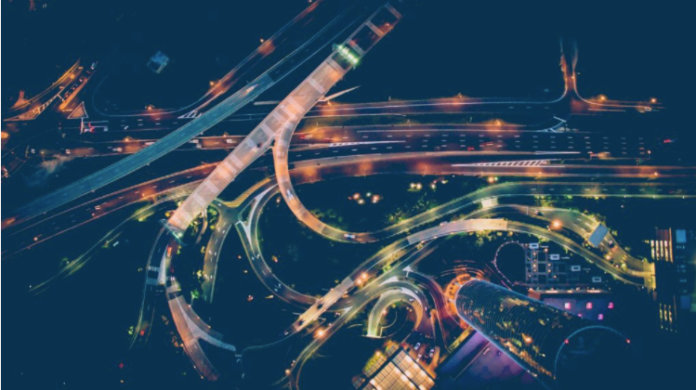
Night Photography
It helps to have a controller or app that gives you a display or FVP for night photography. You can buy additional lighting accessories that you can play around with for great effects.
Depending on what you go for you can take better shots at sunset or even in total darkness if the lights are powerful enough.
The main thing to bear in mind, especially if you are fairly new to photography is that most learning comes from practice and trial end error. You can read countless pages of tips and tricks but the real learning comes from doing it and analyzing the results. See where your errors are and decide what can be done to correct them. Works out what setting are best for what type of shot and setting. Always look at your photographs critically afterwards to see how they can be improved.
Decent photograph and video editing software is also essential to get professional results.
Trust me; it will not take long to be a competent aerial photographer. Once you have the basics mastered, you can fine-tune and perfect your skill and soon you will be taking captivating, incredible photographs.
Read more: