Showing posts with label FAA. Show all posts

Thursday, February 9, 2017

Drone Privacy: What are a Drone Operator’s Rules and Responsibilities?

dronelife.comBY MIRIAM MCNABB
FEBRUARY 7, 2017


Drone privacy seems to be a primary concern for lawmakers, as state and local governments rush to propose laws designed to protect citizens from unwanted intrusion by drone. On a federal level, however, the rules and responsibilities of a drone operator with respect to privacy can be unclear; the FAA provides “best practices” developed by the Department of Commerce, but not specific regulations. Nonetheless, a few basic common sense measures should be sufficient to keep drone operators safe from unnecessary harassment or accusations of invaded privacy. Know the regulations; know your rights; and know how to inform anyone who may question you.


The FAA Position on Drone Privacy Issues

The most recently passed FAA Reauthorization package reflected current concerns about drone privacy, calling for the FAA to research the issue over the next couple of years. But currently, the FAA takes the approach that it doesn’t regulate data gathered by drones, any more than it would regulate data gathered by hand-held cameras. The official position is as follows, taken from the FAA’s Fact Sheet on Part 107:


Respecting Privacy
Although the new rule does not specifically deal with privacy issues in the use of drones, and the FAA does not regulate how UAS gather data on people or property, the FAA is acting to address privacy considerations in this area. The FAA strongly encourages all UAS pilots to check local and state laws before gathering information through remote sensing technology or photography.
As part of a privacy education campaign, the agency will provide all drone users with recommended privacy guidelines as part of the UAS registration process and through the FAA’s B4UFly mobile app. The FAA also will educate all commercial drone pilots on privacy during their pilot certification process; and will issue new guidance to local and state governments on drone privacy issues. The FAA’s effort builds on the privacy “best practices” the National Telecommunications and Information Administration published last month as the result of a year-long outreach initiative with privacy advocates and industry.


The NTIA “Best Practices”

As the FAA references the NTIA “Best Practices,” (full document can be found here) many drone operators use those as regulatory guidelines. Some industry stakeholders hope that by agreeing to follow the guidelines, professional operators will be able to avoid the enactment of stricter regulations that may limit commercial activities. It’s important to note, however, that not all in the drone industry agree. The Drone Manufacturer’s Alliance -which includes DJI, GoPro, 3DR, and Parrot -refused to sign off on the guidelines, saying that drone operators should not be subject to more restrictive standards than other photographers. The ACLU also dissented, under the principle that the right to take pictures is an important freedom.

The Best Practices are detailed – see the link above – but easily summarized. They refer to data collected that might be individually identifiable, and make drone operators responsible for:
Informing anyone affected by collection of data;
Securing any and all of the data;
Limiting how collected data is used and shared.

The best practices also call for not collecting data unnecessarily, or where a subject has a reasonable expectation of privacy: as Brian Fung of the Washington Post says: “Don’t be a jerk.”


Local Laws

Many proposals have been put forth by state and local governments designed to protect citizens from unwanted intrusion by drone, but these almost universally simply restate (or in some cases, increase the penalties attached to) existing laws regarding harassment, stalking or peeping toms. These regulations are not generally aimed at legitimate commercial use, but are designed to further discourage behavior that is already against the law. With state and local regulations in a fluid state, operators should always check before booking jobs in a new area.

While drone privacy issues are a big concern right now, as drones become more prevalent concern may diminish as it has with other breakthrough technologies. In the meantime, operators should know what their rights and responsibilities are before flying, and make every effort to communicate clearly with anyone likely to be affected by data collection.


Read more:

Tuesday, January 31, 2017

Beyond Visual Line of Sight Operations: The Next Target for FAA Regulation


expouav.com
By Juan Plaza
January 30, 2017


One key element of the FAA’s strategy for 2017 is finding consensus on a rule to extend commercial operations over populated areas and controlled airspace beyond visual line of sight (BVLOS) of the operator of the UAV. It’s something they are and will be looking at in order to determine regulation that makes sense for the entire drone industry.

A couple of weeks ago Administrator Huerta, during his speech at CES, emphasized the fact that his agency was beginning to work on draft regulation to issues rules for BVLOS operations. Two of the main elements that need to converge for this important milestone to be crossed involve new detection and avoidance technology as well as testing. There are a variety of tests that will need to take place to ensure flying a drone in this manner is both safe and reliable.

In regards to early detection and avoidance systems, companies such as Aerotenna are partnering with NASA and other industry leaders in the development and safe deployment of microwave-based, 360o technologies that are constantly prying the drone environment and not only its flight path. This innovation allows every drone in the airspace to be constantly “aware” of any other moving vehicle in its environment. It’s the kind of assurance that the FAA will need in order to draft regulations allowing BVLOS in controlled airspace.

The second element that needs to take place in order for BVLOS to be considered safe is testing. These tests would have to be conducted in safe but realistic environments in order to assure the authorities that whatever results are obtained in the test sites can be safely and predictably applied to real flying environments.

On December 28th the Federal Aviation Administration (FAA) approved a certificate of authorization (COA) for the Northern Plains UAS Test Site in North Dakota to be the first in the U.S. to have BVLOS operability. This means the test site will be able to support the development, testing and evaluation of a wide range of new applications for UAS technology.

Companies such as General Atomics and Northrop Grumman are tenants at the Grand Sky technology park, which means they can now evaluate complex UAS operations. It’s something that’s not possible anywhere else in the USA. Other companies are also applying to move into the facility and begin their own testing of new hardware and software aimed at making BVLOS a reality.

The Northern Plains UAS Test Site is ideally located to support beyond-line-of-sight operations, with the combination of an FAA test site, the Grand Sky Technology Park and the Grand Forks Air Force Base, which is home to an upgraded DASR-11 digital radar system.

With the opening of the North Dakota test site, the efforts of private companies to develop new safety technology and the willingness of the FAA to integrate the airspace, it’s only a matter of time before the UAV industry receive the good news that BVLOS has joined the growing number of flying techniques that can be used to apply drone advantages to more and more applications.


Read more:

Monday, January 23, 2017

NASA: Drone Flight Tests FAA Spacecraft Re-entry Technologies


uasvision.com

January 23, 2017


High-altitude drone tests new Federal Aviation Administration, FAA, surveillance technologies potential to support commercial spacecraft.


A drone released from a high-altitude balloon carried a payload to evaluate how the equipment could help the FAA detect and track commercial spacecraft entering the National Air Space, NAS, as it descends from space.

Near Space Corporation, NSC, in Tillamook, Oregon, conducted the flight test on Oct. 3 under the first FAA Unmanned Aircraft System (UAS) test site for UAS high-altitude Certificate of Authorization, COA. With that flight, NSC became the first commercial suborbital space company to conduct a flight test under the agency’s UAS rules.

“It was great to get this first flight with the new COA under our belt,” said Tim Lachenmeier, Near Space CEO. “It took a long time, and a lot of dedicated support from the FAA to get this accomplished. NSC is very excited about the opportunities this high-altitude UAS COA provides, and the unprecedented ability to support testing of technologies for the commercial space industry.”

NASA’s Flight Opportunities program, under the agency’sSpace Technology Mission Directorate, funded the balloon flight of the FAA surveillance technology system. The program uses commercial suborbital vehicles and stratospheric balloons to test flight technologies, which raises thetechnology readiness level of the payloads.

“Flight testing and advancing technologies needed by the FAA to allow detection and surveillance of future spacecraft while entering the national airspace is crucial for the Flight Opportunities program,” said Paul De Leon, NASA’S Flight Opportunities campaign manager. “The program is continuing to grow by adding new commercial suborbital launch vehicles as they become viable, which can increase opportunities for maturing technologies much needed for future space exploration.”

Oregon’s Tillamook Test Range is part of the Pan Pacific UAS Test Range Complex that is one of the FAA’s six designated UAS test sites in the country. The FAA’s Office of Commercial Space Transportation worked with NSC to integrate the special payload into NSC’s High Altitude Shuttle System, HASS, which is a lifting body-shaped drone used to carry new technologies to high altitude for testing and then released to fly back and land at the range semi-autonomously.


The stratospheric balloon system reached 70,000 feet altitude before it released the HASS to simulate a winged spacecraft’s entry into FAA Class A controlled airspace. The descent back to the launch site lasted slightly over 30 minutes, and was followed by the FAA using the new surveillance technology.

The agency tracked the HASS drone from its Seattle Air Traffic Control Center and was observed by agency personnel at the FAA’s Office of Commercial Space Transportation in its Washington DC offices.

The flight provided a real-world simulation of a spacecraft re-entry to help evaluate the applicability of FAA’s Next Generation air traffic control technologies. Due to current FAA UAS regulations, a special new high-altitude COA was required.

The agency issued the COA in August 2016 along with an agreement that specified the special Air Traffic Control provisions for high-altitude flight operations within the Tillamook UAS Test Range.

The purpose of a COA is to specifically help prescribe flight rules for UAS operations in the NAS for the purpose of research, development, test and evaluation. Results of the flight test are still being analyzed but planning for a second flight is underway.

Through the Flight Opportunities program, STMD selects promising technologies from industry, academia and government, and tests them on commercial launch vehicles. The Flight Opportunities program is funded by STMD, and managed at NASA’s Armstrong Flight Research Center in Edwards, California. STMD is responsible for developing the crosscutting, pioneering new technologies and capabilities needed by the agency to achieve its current and future missions.

Photos: Near Space Corporation

Source: NASA


Read more at:
http://www.uasvision.com/2017/01/23/drone-flight-tests-faa-spacecraft-re-entry-technologies/#more-47965

Thursday, January 12, 2017

State Drone Laws: Learn How to Fly Legally Wherever You Are

dronelife.comBY MIRIAM MCNABB
JANUARY 10, 2017


Despite the FAA’s warning that state and local drone regulations would create an industry-stifling “patchwork quilt” of regulations, new drone ordinances, regulations, and laws continue to be introduced across the country. The situation creates a challenging environment for commercial operators trying to operate legally, requiring that they be cognizant not only with FAA regulations but also with those governing the state – and sometimes the town or city – in which they plan to fly. Below are some resources to help operators find their local drone laws.

Efforts by federal lawmakers to introduce a “pre-emption” statement as part of the FAA Reauthorization package – a statement that the FAA is the only agency with authority to regulate the NAS (National Airspace) – failed to make it through to the final version. The FAA’s 2015 Fact Sheet on the subject, distributed to state and local governments, was equally unsuccessful in stemming the flow of new regulations. Local drone regulations are often tied to criminal mischief or harassment ordinances; and operators who are not familiar with them may inadvertently come into conflict with local police.

Commercial operators must investigate local and state drone laws before they fly, and that’s not always easy. To make the environment more confusing, drone regulations on a local level often don’t fall under the jurisdiction of a state’s Department of Transportation. In researching this article, DRONELIFE investigated the state websites of several smaller New England states to see how operators might learn about local drone laws: smaller states can provide additional challenges as a “local” commercial drone operator may fly in two or three different states.

In the state of New Hampshire, for example, the state’s Department of Transportation offers a comprehensive list of resources for drone operators, including links to the appropriate FAA sites and providing a list of contacts within the state; but does not refer to any local or state level regulations. A call to a NHDOT‘s representative listed on the page was immediately answered by Aviation Planner Rita Castonquay Hunt of the state’s Bureau of Aeronautics, who explained that as the one state drone law relates to the use of drones by hunters, it is listed on the Fish and Wildlife Services page. Still, Ms. Hunt commented that contacting the state was the best first step for a commercial operator to take in determining local regulations: “It is very important that UAS operators understand and stay up to date with state legislation; luckily your state’s Aeronautics Bureau can assist you with that. Here in NH we are happy to help recreational and commercial operators comply with state and federal regulations,” says Hunt.

If a call to the state doesn’t bear fruit, there are other resources to help. The National Conference of State Legislatures keeps a list of state level drone regulations here; they also offer a list of some state resources to contact. Even easier to use is the comprehensive e-book prepared by drone attorneys at Drone Law Today. “State Drone Law: State Laws and Regulations on Unmanned Aircraft Systems” is a new resource available to the drone community for free download. The book provides an alphabetical reference explaining the drone laws of each state in easy to understand terms, with references. Noted drone attorney and co-author Steve Hogan, Shareholder at the Ausley McMullen law firm, says that the landscape of state laws is shifting continually: “The only constant in the world of drone law is change,” says Hogan. “Every state will likely pass some sort of drone regulation at some point. The states with laws on the books will tinker with them over time. We plan to stay on top of these developments to keep the drone industry informed.”

Finally, the most important point for operators to remember is to fly responsibly and remember that while the industry is growing, drones aren’t an everyday sight in most neighborhoods. Many state and local laws are simply a restatement of harassment laws that now mention drones specifically. As challenging as it can be, if possible or practical operators or their clients may want make an effort to notify nearby residents or local law enforcement of their operation in advance.


Read more at:

Tuesday, January 10, 2017

Free Online Course about New FAA Regulations from Embry-Riddle

suasnews.com
By Press
9 January 2017


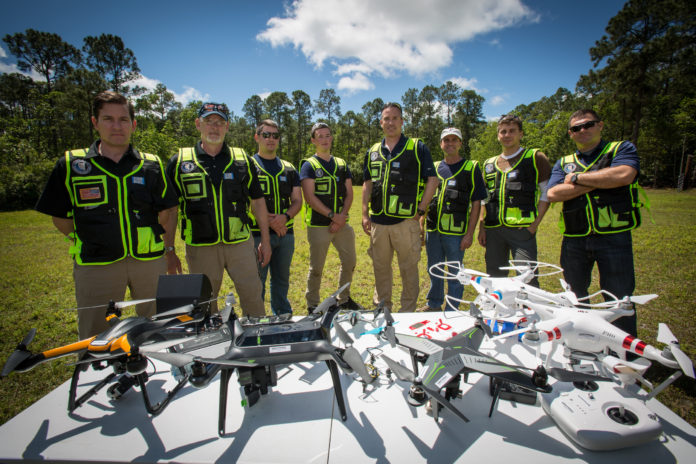
A team of faculty from the Worldwide campus tests UAV's, in partnership with Nevada Institute for Autonomous Systems, NIAS, at a property in New Smyrna Beach for a UAV user's guide, April 23, 2016.

DAYTONA BEACH, Fla. – If you received a small unmanned aircraft system (sUAS), or drone, as a gift this holiday season, or if you want to stay updated on the latest FAA regulations for these aircraft, Embry-Riddle Aeronautical University is providing a free, two-week online course–Small Unmanned Aircraft System (sUAS) – Key Concepts for New Users. Registration for the course is now open.

The Massive Open Online Course (MOOC) runs Feb. 6 to 19 and introduces novice sUAS users and seasoned aeronauts to numerous aspects of unmanned systems, as well as current and future applications. The MOOC also offers guidance on responsibly piloting aircraft in the National Airspace System (NAS).

This course is taught by a team of UAS experts, led by Dr. Scott Burgess, Associate Professor at Embry-Riddle Worldwide’s College of Aeronautics. Dr. Burgess has over 30 years of aviation expertise in both military and civilian aircraft, including helicopters and unmanned aircraft systems.

“This post-FAA Part 107 course will focus participants toward regulations, safety of flight and flight planning considerations,” said Burgess. “We have an outstanding team of faculty with private, commercial and government sector experts teaching on topics such as UAS integration, regulation, international operations, safety and systems. We will also harness the power of social media so participants can interface directly with each other and faculty.”


Students will learn the basic elements of safety, and airspace definitions and regulations so those individuals using the NAS understand and use best practices for reducing the risk of collisions between aircraft when operating a sUAS. This popular course, previously offered in 2016, has been updated to include the FAA’s new 2016 regulations (FAA Part 107) for sUAS operators.

For more information and to register go to Small Unmanned Aircraft System (sUAS) – Key Concepts for New Users. You may also download Embry-Riddle’s free sUAS Consumer Guide, designed to assists a wide variety of users, especially novices, to evaluate options for purchase, appropriate to their skill and experience levels, while introducing key metrics for future consumer sUAS comparison.


For additional information on this and other specialized industry training online courses, please contact Gary Burke, Worldwide Director of the Office of Professional Education, Embry Riddle Aeronautical University, 600 S. Clyde Morris Blvd., Daytona Beach, FL 32114. Email: training@erau.edu; Phone (386) 226-7232.

About UAS at Embry-Riddle
Embry-Riddle was one of the first schools in the nation to offer a degree in UAS and today has the nation’s largest UAS degree program. The University offers: a Bachelor of Science in Unmanned Aircraft Systems Science at the Daytona Beach, Florida and Prescott, Arizona Campuses; a Bachelor of Science in Unmanned Systems Applications through the Worldwide Campus; a Master of Science in Unmanned & Autonomous Systems Engineering at the Daytona Beach Campus; and a fully online Master of Science in Unmanned Systems through its Worldwide Campus. Embry-Riddle is also a co-founder of the ASSURE Coalition (Alliance for System Safety of UAS through Research Excellence), a Federal Aviation Administration Center of Excellence in Unmanned Aircraft Systems.


Read more at: