Showing posts with label free. Show all posts

Monday, February 20, 2017

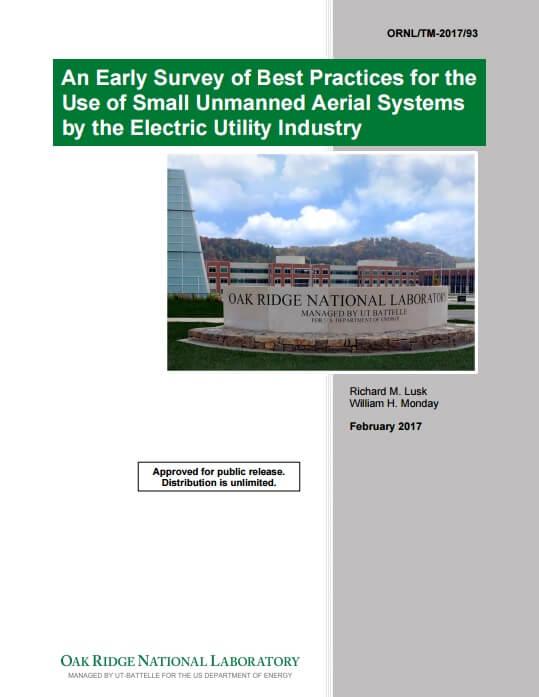
FREE Publication: Best practices for the use of sUAS by the Electric Utility Industry

suasnews.com
By Gary Mortimer
20 February 2017


A weighty and informative report from ORNL penned by Richard Lusk and William Monday. The report is crammed with information useful for any commercial UAS operator. It includes checklists as well. Always good to see other people’s thinking on that subject.

The introduction is bang on as well, top notch, if you are a serious drone pilot don’t continue with your day until you have downloaded this!

Unmanned aircraft have been around longer than anyone reading this preface. Previously the domain of military operations and some dedicated hobbyists, the technology has become commoditized.

Miniaturisation of computational components, mixed with ubiquitous GPS access and leveraged manufacturing economies of scale, has introduced relatively aerodynamically stable personal drones into everyday life.


The change that is upon us now is that the barrier for access to this technology is a few hundred US dollars. A person with no training or experience can purchase one of these machines and fly it into the National Air Space the same day.

The following analogy is one I frequently use when discussing this three-dimensional risk with people who have little experience with aviation, airspace, or UASs.

Let us say that someone goes into a big-box store and purchases a go-cart. Upon leaving the store, he starts the go-cart and immediately drives it across the parking lot; across the interstate, obeying no right of ways or traffic laws or signs; and across people’s property, at random.

People respond, “That’s crazy. No one would do that!” However, that is exactly what many, and perhaps most, new drone “drivers” do.


Read more:

Friday, February 17, 2017

FREE 3D Printed Micro Quad design


suasnews.com
By Kirk Greninger
17 February 2017


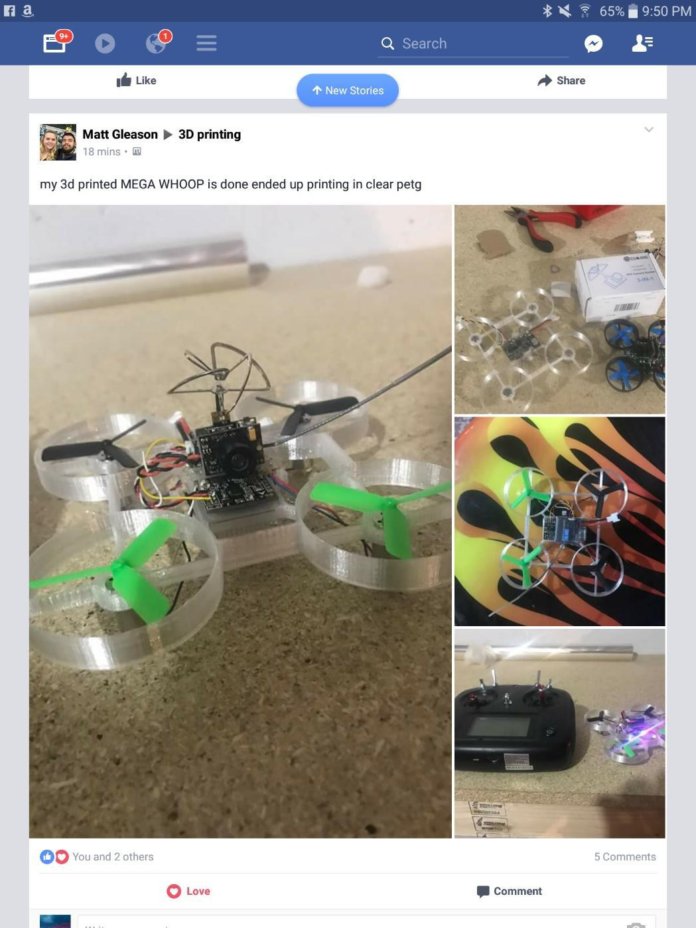
Yesterday while scrolling through my Facebook feed I ran across this little gem of a post by Matt Gleason featuring a 3d printed micro quad, Mega Whoop, while there are sure to be others out there this is the first I’ve seen posted publicly in the 3d printed groups also now offered on thingiverse the location where most free 3d print designs are exchanged. I contacted Matt and he gave me a little background on his experience and how this project came together.

Do you work in 3d printing or is it a hobby?
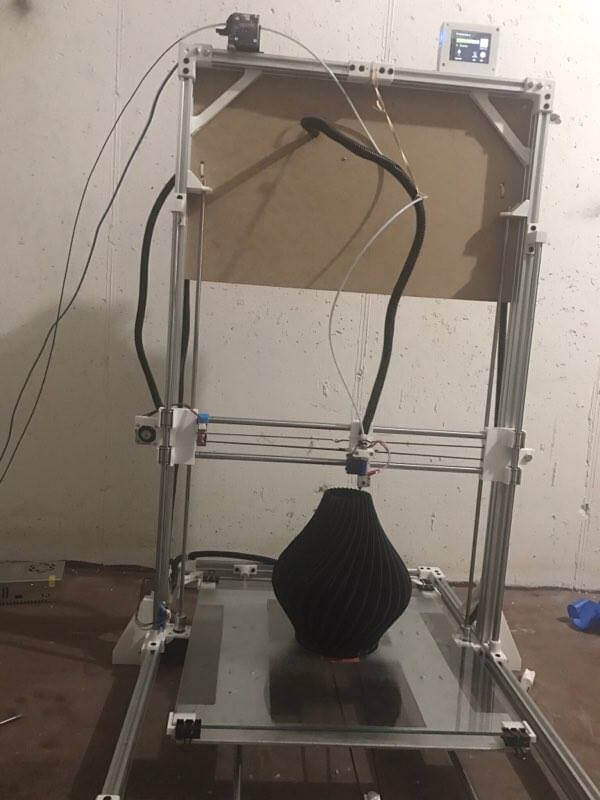


Matt: Just a hobby, I print a lot for household reasons, drones or building other printers
(laugh)

Matt: I designed and built this one


What lead you to design a 3d printed mini Quad? You’ve built your own printers from scratch?

Matt: I bought a eachine 105 bat and broke it after one day and designed a new frame for it and decided I wanted something more indoor friendly and really like the tinywhoop but wanted something that would be able to handle outside also that’s when I decided to build an oversized tinywhoop I came up with a very interesting motor mount design also seeing as it’s hard to get the holes sized perfectly from 3D printing I went with a flexible pressure fit that it pretty unique!

Matt: And yes that printer I designed most of the parts some were taken from other designs like the corners and so on but I designed the important parts.

What application did you use to design the mini quad?
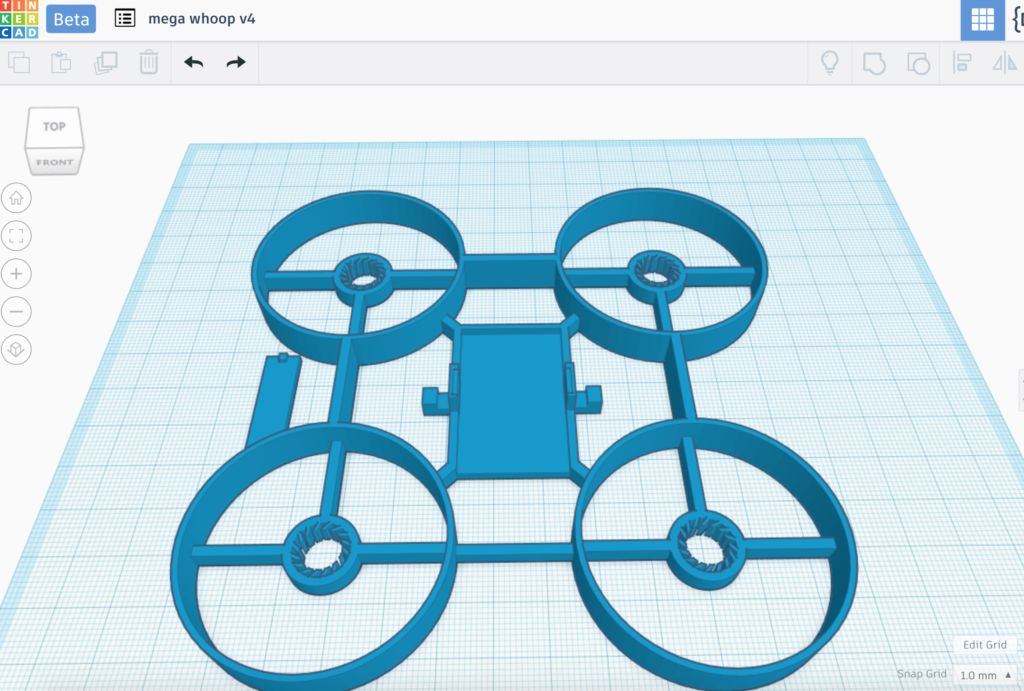


Matt: Thinkercad, it’s my go to design program

I see you are also in the sphere builders group, do you have a general interest in robotics?

Matt: I’ve always wanted to get into robotics but I’m not much of a programmer so that’s always stopped me 3D printing was definitely a good first step especially with building my own printer. I went into it knowing nothing about programming and had to learn simple Arduino coding to make it all work

So do you think you’ve become proficient with marlin and g code fairly fast, or has it been a slow Process?

Matt: Marlin was difficult for me to understand at first but after 3 days of messing with it I was able to flash my board and get everything working pretty well. I think my biggest problem was getting my e steps correct. As for gcode I don’t edit it much after what simplify 3D outputs no need really

Will you be selling the STL or offering it for free?

Matt: I’ll be putting it up for free just want to make sure the motor mounts I designed don’t fail over time also need to design caps for the bottom of the motors.

Mega Whoop brushed FPV

“ Summary:

I designed this mega whoop to be an indoor friendly large sized whoop! The motor mounts are force fit and hold very tight, I had to spin motors in with pliers. The camera mount I just hot glued to the top posts and used a small amount of hot glue to hold the camera in place since I wanted it all removable. battery is held in place with a rubber band which there are mounts for.”

Moving forward it will be interesting to see this technology adapted to production in novel ways like this to produce items once only attainable in a lab or through large scale manufacturing, I did mention to Matt that it’s possible to commercialize STL files in bundles with electronics kits and it’s likely we will see this in the future in both the commercial and hobby sectors of the drone industry.


Read more:

Thursday, February 9, 2017

FREE event: In Pursuit of Global Drone Standards

suasnews.com
By Press
9 February 2017


During the Obama administration, armed unmanned aerial vehicles, more commonly referred to as drones, were a key component of U.S. counterterrorism strategy. After more than eight years of use in a variety of theaters – both inside and outside traditional battlefields – the United States’ use of armed drones has prompted other governments to pursue precision strike capabilities using unmanned platforms. Yet few rules govern the transfer and use of these systems. As drones proliferate, countries are considering how best to regulate drones.

In 2016, the Obama administration announced a joint declaration for the export and use of armed drones, which has served as an impetus for future discussions on the topic. The declaration has since been signed by more than 50 countries with plans to convene multilateral discussions throughout 2017. As the Trump administration enters office, many observers are questioning how these efforts will progress in the new year.

Please join the Stimson Center for a panel discussion on efforts to establish global standards for drone transfer and use. Experts will discuss the current status and future prospects of the Joint Declaration for the Export and Subsequent Use of Armed or Strike-enabled Unmanned Aerial Vehicles and will provide insight on what is needed to ensure that such an agreement is effective and successful.

WHAT: Panel discussion on efforts to establish global standards for drone transfer and use.
WHERE: Stimson Center, 1211 Connecticut Ave NW, 8th Fl, Washington D.C., 20036
WHEN: Wednesday, February 23, 2017, 2:00 P.M. – 3:30 P.M.
LIVESTREAM: A link to the live stream will be available on this page prior to the start of the event.
FOLLOW: @StimsonCenter and @RachelStohl for news and information on the event.


Read more:

National Association of Tower Erectors release second edition of FREE drone safety guide.

suasnews.com
By Press
9 February 2017


The National Association of Tower Erectors (NATE) has released the 2nd Edition of the NATE Unmanned Aerial Systems Operations Around Vertical Communications Infrastructure resource document.

The 2nd Edition of this safety resource is a by-product of collaboration between the NATE Unmanned Aerial Systems (UAS) Committee and other prominent representatives from the commercial UAS industry. The intended focus of the document is on UAS operations around wireless infrastructure, cellular towers, broadcast towers and utility structures. The 2nd Edition also incorporates updates from the new guidelines and provisions associated with the Federal Aviation Administration’s (FAA) Rule 107 for the commercial utilization of UAS technologies.

“NATE is the industry leader in the integration and utilization of UAS around communications infrastructure,” stated Executive Director Todd Schlekeway. “The 2nd Edition of this safety document will serve as a go-to resource for all workers and stakeholders in the industry to use as a guide in order to expand the safe and efficient commercial operation of UAS,” added Schlekeway.

The 2nd Edition of the NATE Unmanned Aerial Systems Operations Around Vertical Communications Infrastructure document is available to download for free here.


Read more:
https://www.suasnews.com/2017/02/national-association-of-tower-erectors-release-second-edition-drone-safety-guide/

Sunday, January 22, 2017

Free online seminar explains the cost and process of drones in agriculture


dronelife.com
BY MIRIAM MCNABB
JANUARY 19, 2017


With the clear benefits that agronomists get from a birds’ eye view of their crops, precision agriculture has been one of the leading applications of drones across the globe. The technology offers incredible advantages: with the data provided by drones farms of any scale can conserve resources, monitor crops, make better predictions, and save money.

But in precision agriculture as with many commercial drone applications, companies can be hesitant to invest in new technology without a clear understanding of the cost benefit. Now, with their line of commercial drones having flown more than 300,000 flights and 90,000 hours over more than 30 million acres, senseFly will host a webinar to lay it out clearly. senseFly, the Parrot company behind the lightweight professional eBee drone, will host the free webinar at 10:00 EST/16:00 CET on Tuesday, January 24. “The information shared during this webinar will help those in agriculture understand the value drones can bring to their business,” Nathan Stein, senseFly Ag Solutions Manager, tells DRONELIFE.

During this event, experienced operators from two of the ag market’s agronomy leaders—AIRINOV (France) and Deveron UAS (Canada)—will discuss their companies’ drone use, including the opportunities and challenges that adopting this technology brings. Attendees must register in advance for the one-hour webinar, entitled Ag Drone Insights – Experienced Agronomists Discuss UAV Results, Costs, Workflows and More.

“Across the globe, agronomists, growers and researchers are increasingly using drones to gain deeper insights and to optimise their operations,” said senseFly’s CEO, Jean-Christophe Zufferey. “This webinar will help professionals who have yet to adopt UAV technology to more fully understand how and when drones can help drive their businesses, and those of their clients, forward.”

Topics covered in the webinar will include:
· How to choose, adopt and operate ag drone technology
· The different drone applications possible — from scouting to irrigation planning
· How to manage drone data and transform this into marketable products
· The real cost of ag drone ownership
· The impact of drone regulations on doing business
· How to build a scalable business based on drone generated imagery

Entrepreneur and farmer Norm Lamothe, head of UAS agriculture at Deveron UAS, will demonstrate how Deveron UAS employs drone tech across eastern Canada to more accurately analyse the health of its clients’ crops, optimise their applications, predict yields and identify issues such as disease and infestation.

Agricultural engineer Erick Lebrun, communications manager at AIRINOV, will discuss how AIRINOV combines its expert crop insights with data from senseFly fixed-wing UAVs to help its customers produce more and optimise their time. For example, he will detail AIRINOV’s work with OCEALIA Groupe, a large French farming cooperative, whose farmers have benefitted from a 10 percent yield increase since employing AIRINOV’s drone-based consulting services.

In addition, senseFly will provide a glimpse into the company’s newest advanced agricultural drone, the eBee SQ.


Read more at: